COMPLETE BEGINNER GUIDE
How to Budget on a £2,000 Salary (UK)
Learn how to budget on a £2,000 monthly take-home salary with a realistic UK budget example and simple step-by-step plan.
Start here
- Start with your actual take-home pay
- Prioritise essentials first
- Build a simple, flexible budget
- Adjust based on real spending
Who this guide is for
If you take home around £2,000 per month and feel like your money disappears too quickly, this guide will help you build a simple, realistic budget that fits your actual life — not an idealised version.
Table of Contents
- Quick summary
- Is £2,000 enough to budget with?
- A realistic budget breakdown for £2,000 take-home salary
- Step 1 — Cover your essentials
- Step 2 — Plan your lifestyle spending
- Step 3 — Build savings (even small amounts)
- Step 4 — Add a buffer for real life
- Real-life scenarios
- Common mistakes
- How to improve your budget over time
- Common questions
- Next steps

Quick Summary
- £2,000 monthly take-home pay is enough to build a solid budget
- Focus on priorities first, not perfection
- Small improvements make a big difference over time
Is £2,000 a month enough to budget with
Yes — but how you budget depends on your situation.
Your location, rent, and lifestyle will all affect how far your £2,000 monthly salary goes.
According to the ONS, household costs vary significantly across the UK, meaning £2,000 may feel comfortable in some areas and tight in others.
👉 The key is not how much you earn — it’s how you structure it.
A clear plan helps you:
- avoid overspending
- reduce stress
- make progress, even if it’s slow
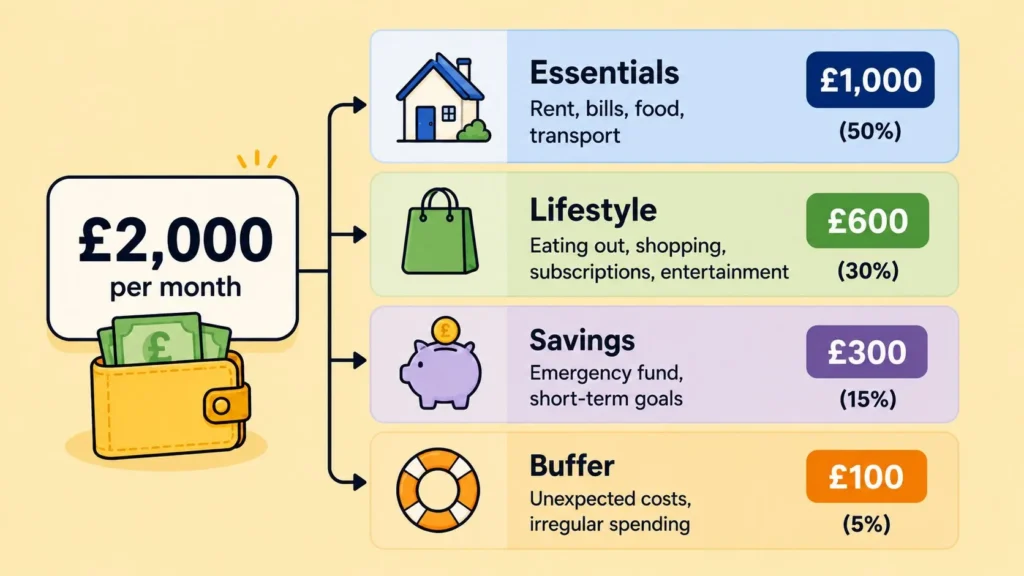
A realistic budget breakdown for £2,000 monthly take-home pay
A simple starting point could look like this:
- £1,000 → essentials
- £600 → lifestyle
- £300 → savings
- £100 → buffer
👉 This isn’t a rule — it’s a guide.
Your actual numbers might be different, depending on:
- rent
- commuting costs
- debt
- personal priorities
You can use our Simple Budget Planner to build your own budget.
1
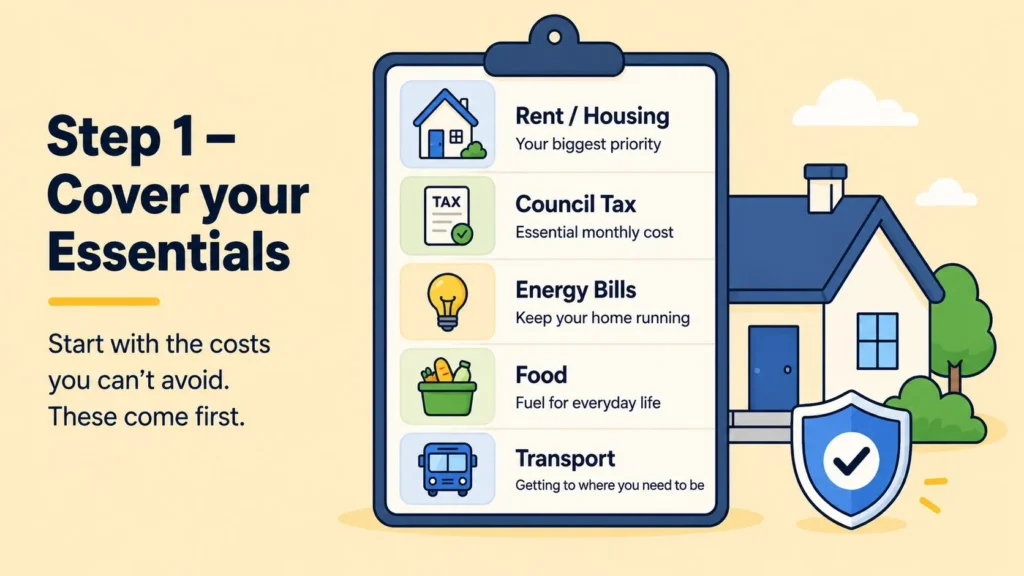
Cover your Essentials
Start with the costs you can’t avoid.
- rent
- council tax
- energy bills
- food
- transport
These will usually take up the largest part of your income.
👉 If your essentials are too high, everything else becomes harder – so this is the most important area to review over time.
2
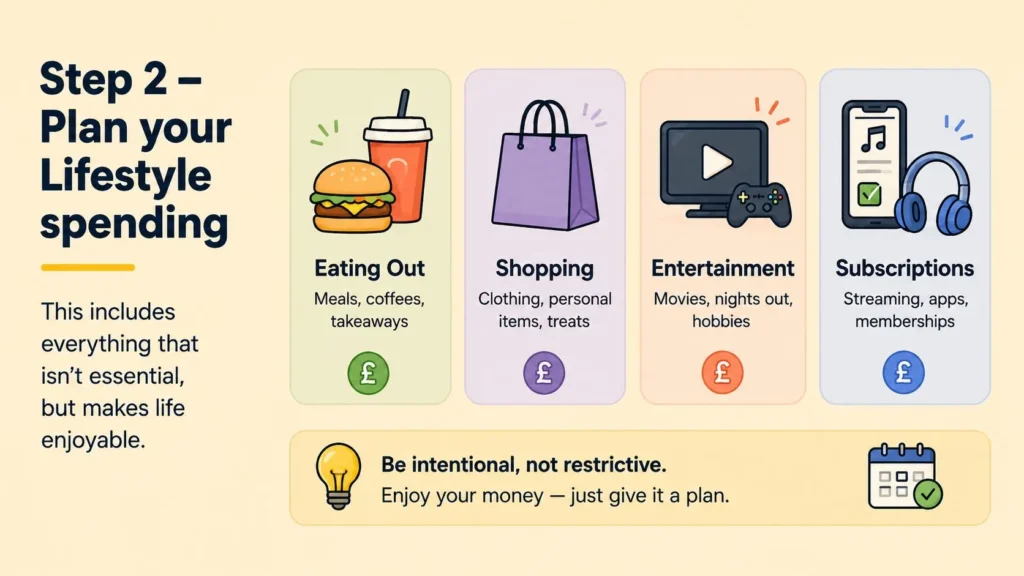
Plan your Lifestyle Spending
This includes everything that isn’t essential:
- eating out
- shopping
- subscriptions
- entertainment
- if you’re not sure where your money is currently going, start by tracking your spending for a few weeks.
3
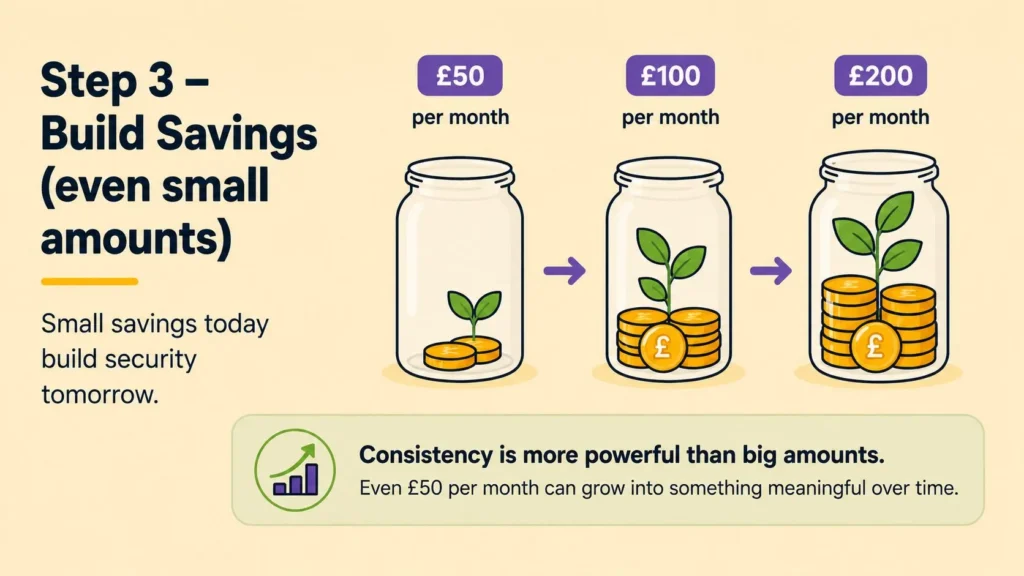
Build Savings (even small amounts)
You don’t ned to save a huge amount to make progress.
Even:
- £50-£200 per month
can build momentum over time.
👉 The goal is consistency, not perfection.
4
Add a Buffer for Real Life
Unexpected costs happen.
- birthdays
- travel
- small emergencies
- price increases
Setting aside even a small buffer will help.
👉 This prevents your budget from breaking every time something changes.
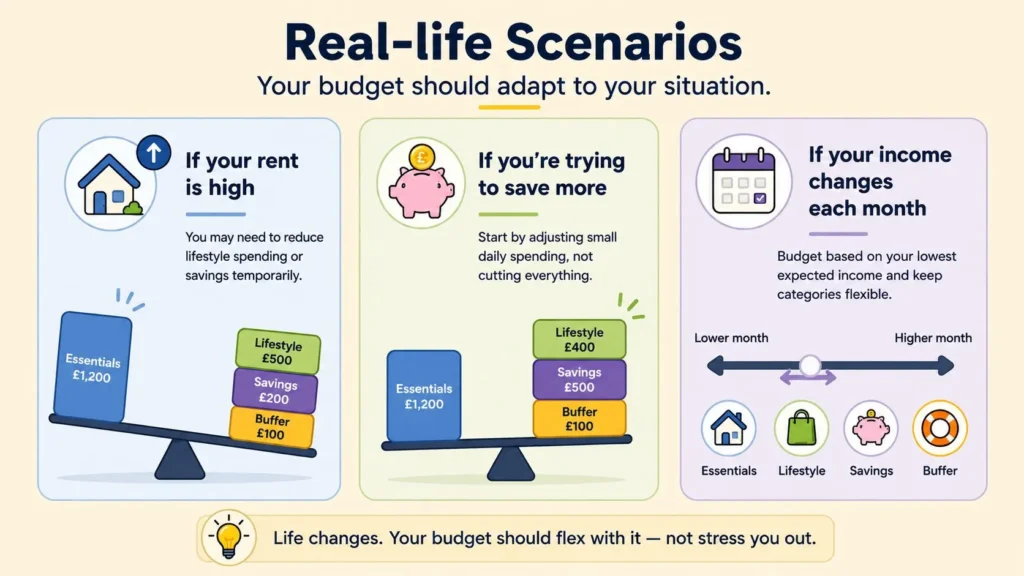
Real life scenarios
If your rent is high (£900+)
→ You may need to reduce lifestyle spending or savings temporarily
If you’re trying to save more
→ Start by adjusting small daily spending, not cutting everything
If your income changes slightly each month
→ Budget based on your lowest expected income
If you’re saving for a house deposit
→ Increase savings before increasing lifestyle spending.
👉 Your budget should adapt to your situation — not the other way around.
⚠️ Common mistakes
- Trying to save too much too quickly
- Ignoring small daily spending
- Not leaving any buffer
- Comparing your budget to others
👉 Your budget only needs to work for you.
How to improve your budget over time
Your first version won’t be perfect — and that’s fine.
Improve it by:
- reviewing your spending weekly
- adjusting categories gradually
- increasing savings when possible
👉 Small changes compound over time.
If you’re new to budgeting, read the complete beginner guide to understand how to build your full system.
Common questions
How should I budget on a £2,000 salary in the UK?
A simple starting point is the 50/30/20 budgeting rule. On a £2,000 monthly take-home salary, that means around £1,000 for essential expenses, £600 for lifestyle spending, and £400 for savings or financial goals. Adjust these percentages based on your housing costs and personal circumstances.
Can you save money on a £2,000 salary?
Yes. Even small amounts saved consistently can make a big difference over time. If saving 20% isn’t realistic, start with whatever you can afford and increase it gradually as your income grows or expenses fall.
What is the 50/30/20 rule for a £2,000 salary?
Using a £2,000 monthly take-home income:
- 50% for needs = £1,000
- 30% for wants = £600
- 20% for savings = £400
It’s a guideline rather than a strict rule and can be adjusted to suit your situation.
Is £2,000 a month enough to live on in the UK?
For many people, yes, although it depends heavily on where you live and your housing costs. Someone renting a room outside London will usually have much more flexibility than someone renting alone in a high-cost city.
What if my essential bills are more than 50% of my income?
This is very common. The 50/30/20 rule is only a starting framework. If your rent, mortgage, or other essentials take up more than 50% of your income, focus on building a realistic budget that covers necessities first and then allocate what remains to savings and discretionary spending.
How often should I review my budget?
Review your budget at least once a month and ideally once a week. Regular reviews help you spot overspending early and make adjustments before small issues become bigger problems.
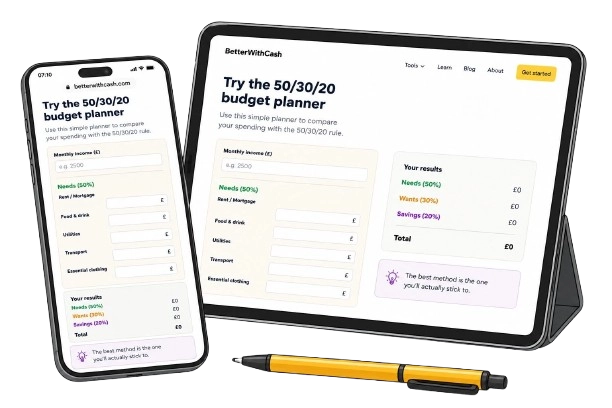
Get the 50/30/20 Budget Planner
Compare your spending against the 50/30/20 budgeting rule, and see where your money may be out of balance.
- Instant feedback
- Simple category background
- Works on mobile