ARTICLE FOR BEGINNERS
How to Budget Your Money (Step-by-Step for Beginners)
A simple budgeting for beginners guide that shows you how to plan your money, reduce stress, and start saving.
Quick Summary
- Budget = plan your money
- Start simple
- Review weekly
Table of Contents
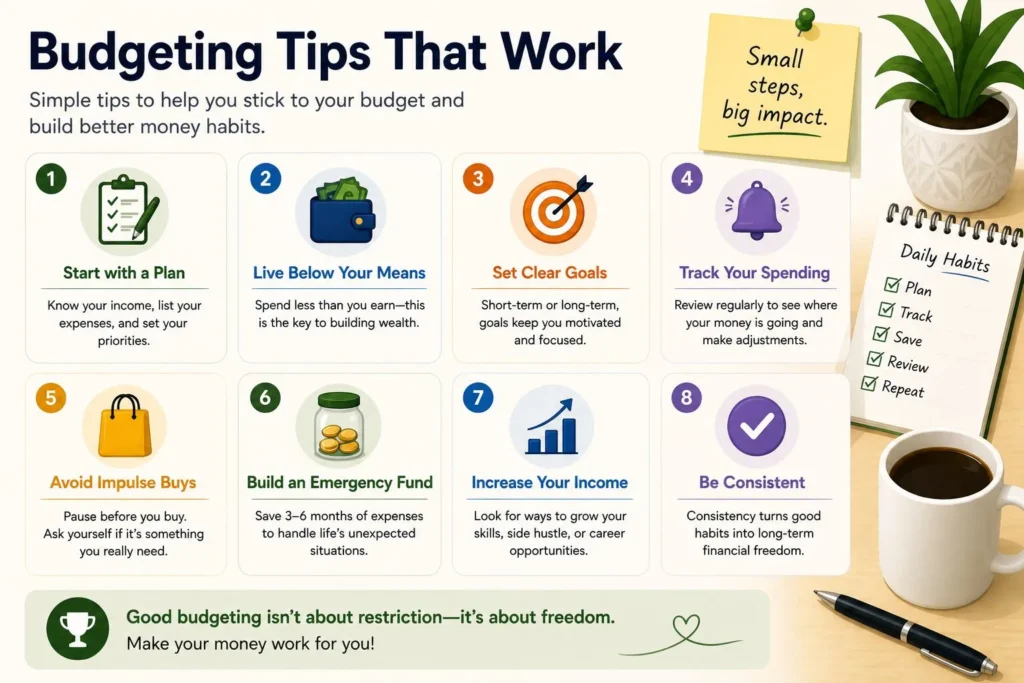
Most people don’t have a money problem — they have a plan problem.
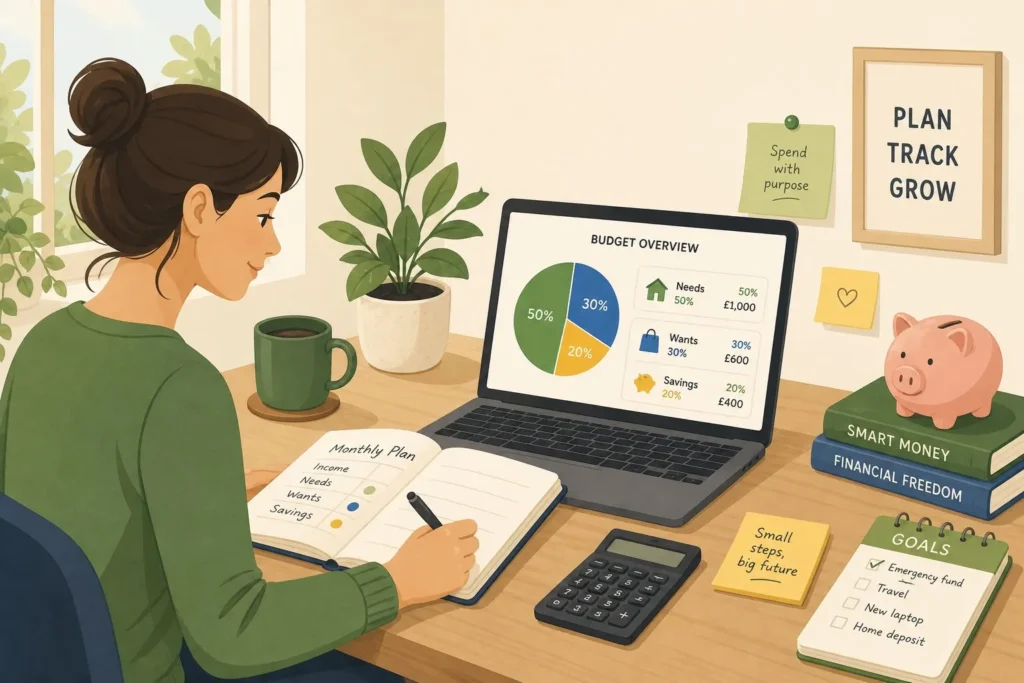
Budgeting isn’t about cutting out everything you enjoy. It’s about deciding where your money should go before you spend it.
If you’re completely new to budgeting, don’t worry. This budgeting for beginners guide breaks the process into five simple steps that anyone can follow. By the end, you’ll know how to create a budget, track your spending and build better money habits.
The goal isn’t perfection. It’s creating a simple budget you can stick to consistently.
What is budgeting (and why does it matter)
At its core, budgeting is just knowing how much money you have and deciding where it should go.
A good budget helps you:
- avoid overspending
- reduce stress
- save more consistently
- feel in control of your finances
You’re not restricting yourself – you’re giving your money a plan.
1
Know your Real Income
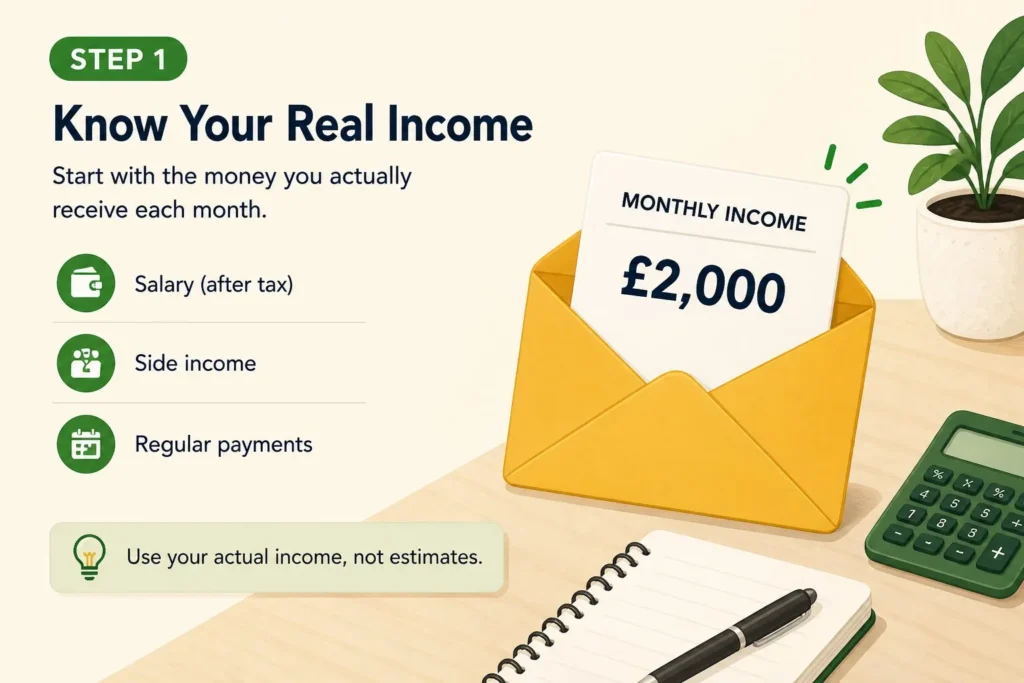
The first step in budgeting for beginners is understanding your real income.
- salary or wages (after tax and national insurance)
- self-employed income
- side hustles
- benefits
- rental income
- interest from savings
2
List your Expenses
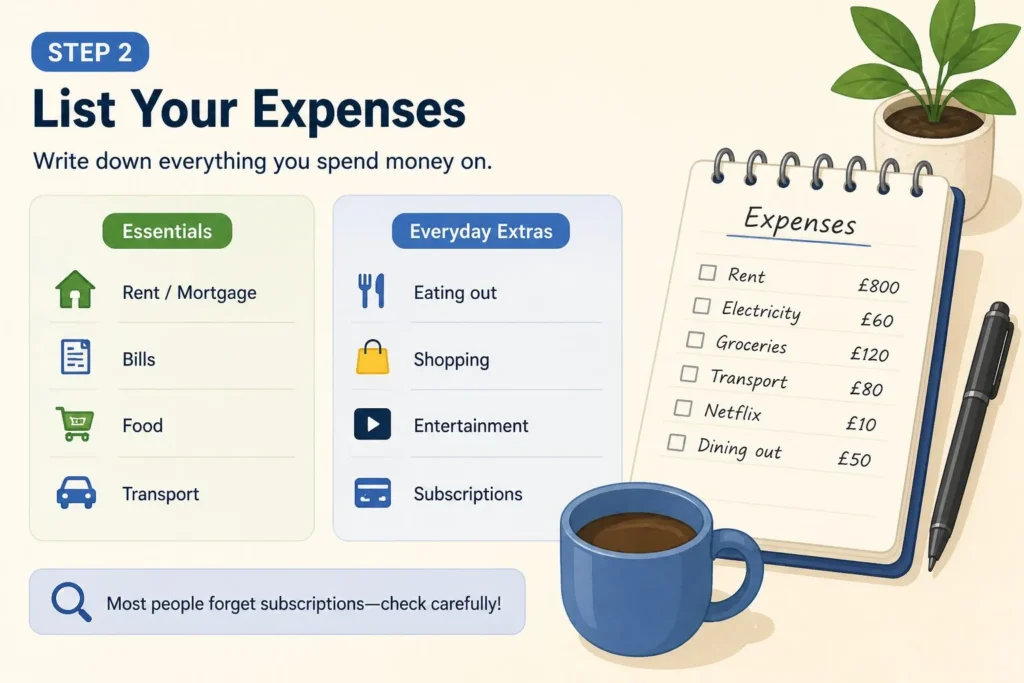
Next, write down everything you spend money on.
Start with essentials:
- rent or mortgage
- bills
- food
- transport
Then include:
- eating out
- shopping
- entertainment
Commonly forgotten expenses include:
- car servicing
- annual insurance
- subscriptions
- holidays
- birthdays and Christmas
Don’t aim for perfection – just get a realistic picture
3
Categorise your Spending
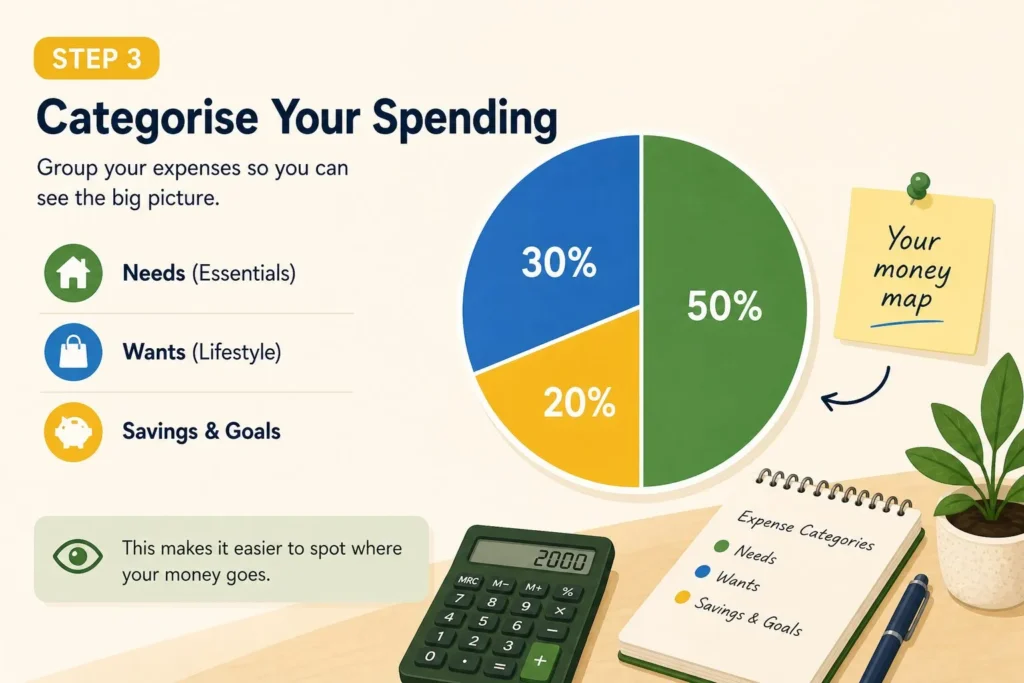
Many budgeting for beginners guides jump straight into budgeting methods, but categorising spending first makes the process much easier.
Needs:
- rent
- council tax
- groceries
- utilities
Wants:
- eating out
- entertainment
- shopping
Saving:
- emergency fund
- pension
- house deposit
4
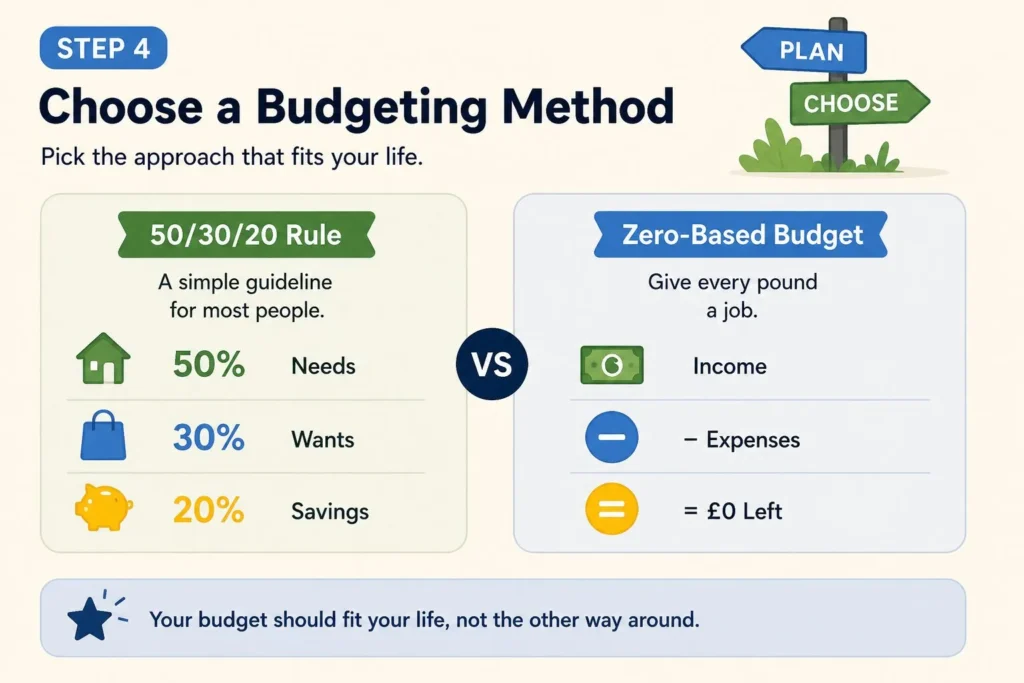
Choose a Budgeting Method
A beginner budget doesn’t need to be perfect.
Popular budgeting methods include:
- 50/30/20 Budget
- Zero-Based Budget
- Pay Yourself First
The 50/30/20 rule is a simple budgeting method that works well for many people. For example, if you earn £2,000 per month, the 50/30/20 rule would give you:
- 50% → needs = £1,000 for essentials
- 30% → wants = £600 for lifestyle
- 20% → savings = £400 for savings
If that doesn’t fit your situation, adjust
5
Track your Spending
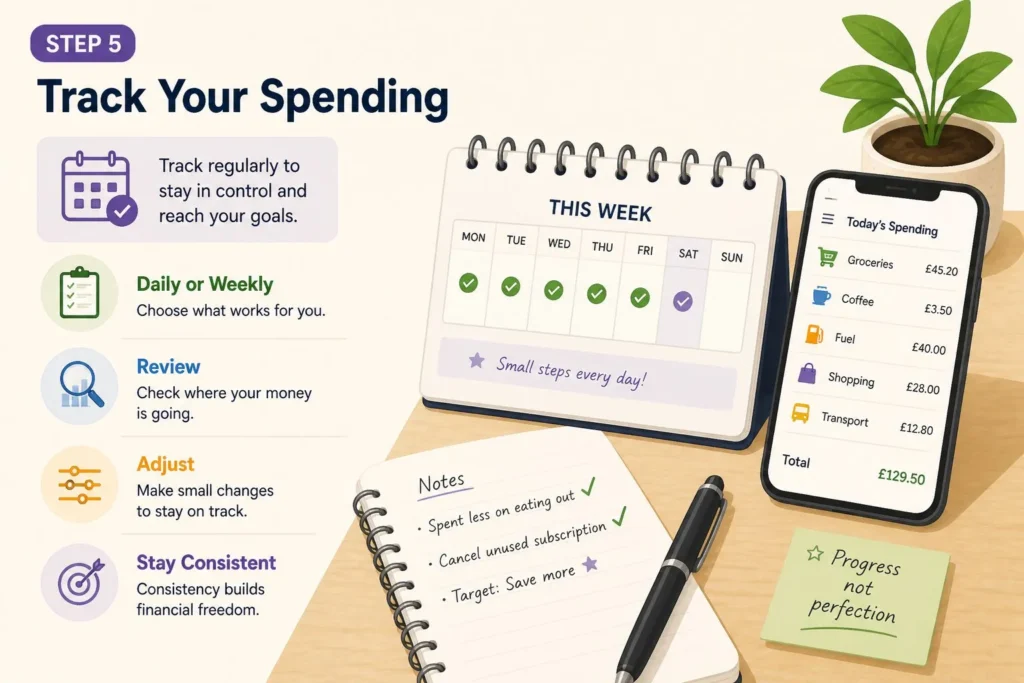
This is the step most people skip. You can track spending using:
- a spreadsheet
- a budgeting app
- a notebook
- a printable budget planner
Check what you spent and compare it to your plan. The important thing isn’t the tool. It’s building the habit.
Ready to track your spending?
Knowing where your money goes is the fastest way to improve your budget.
A simple example budget
Let’s say you earn £2,000 per month.
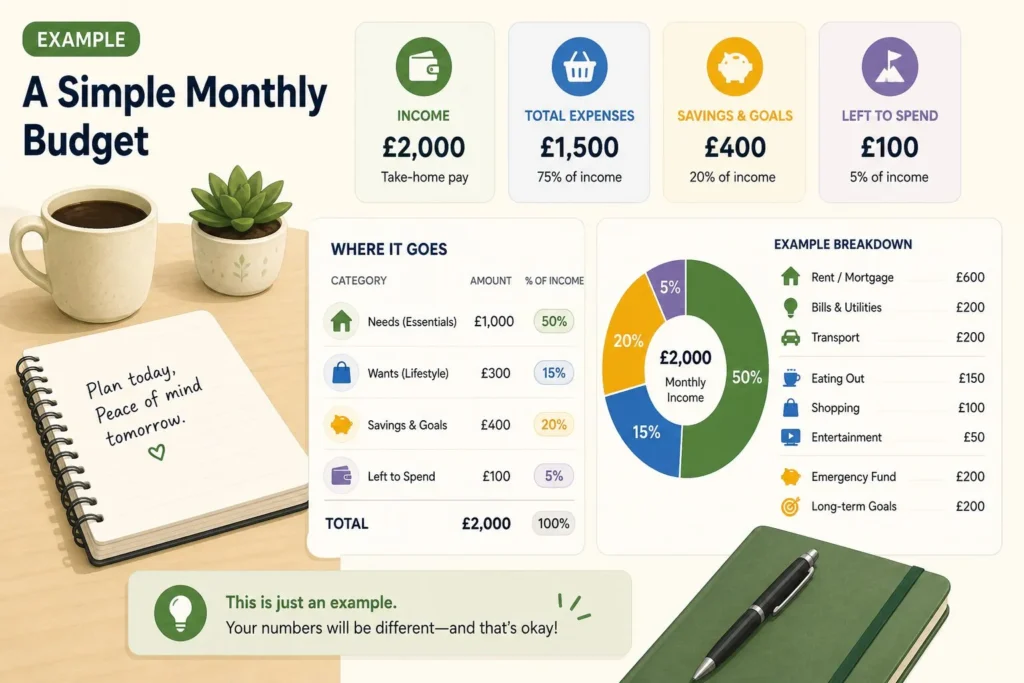
If you’d like to see a full breakdown, read our guide on budgeting on a £2,000 salary.
Remember: this example is only a guide. Your own budget will depend on your income, housing costs and financial goals.
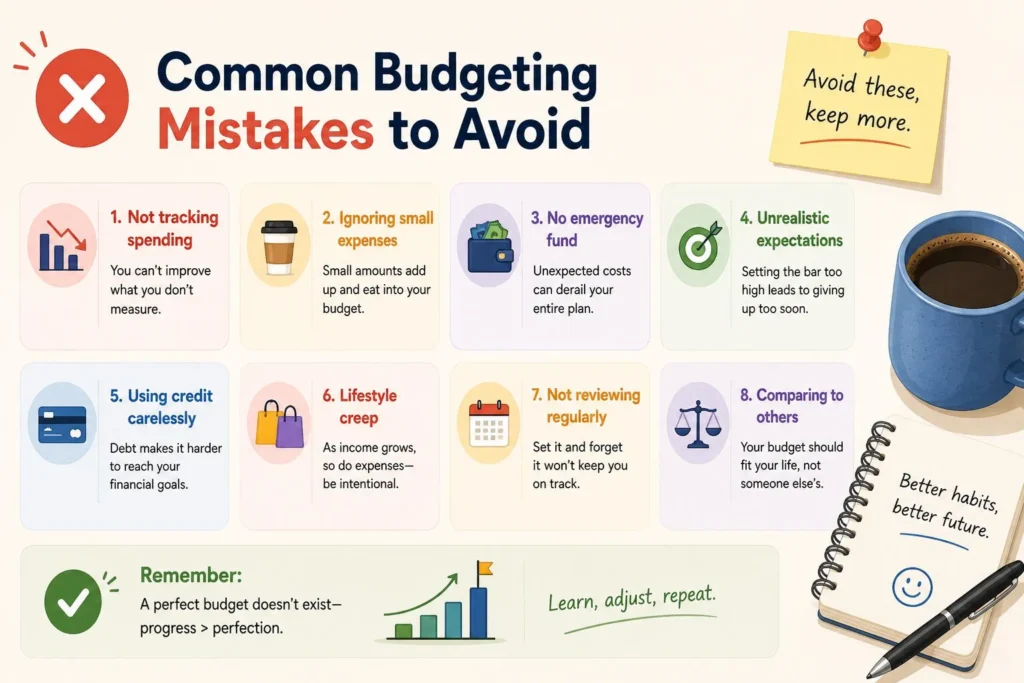
⚠️ Common budgeting mistakes to avoid
Setting unrealistic goals and failing to review or adjust your budget are probably the biggest mistakes. Here are some other common things that could trip you up.
🛠 Tools to help you stay on track
You don’t need complicated software to manage your money.
Spreadsheet
Perfect if you like flexibility and complete control over your budget. You can customise categories, create savings goals and see exactly where your money goes each month.
Budget Planner
Ideal if you want a ready-made system without building your own spreadsheet. Download our free Budget Planner if you want to start budgeting today.
Budgeting App
Helpful for automatically tracking spending and categorising transactions. Many apps connect directly to your bank account and update your spending automatically.
Notes App or Notebook
A simple option for people who prefer pen and paper or quick weekly reviews. Writing down expenses manually can increase awareness of where your money is going.
👉 The best budgeting tool is the one you’ll consistently use.
Common questions
What is budgeting?
Budgeting is the process of creating a plan for your income and expenses. A budget helps you decide how much to spend, save and invest so you stay in control of your money and work towards your financial goals.
How do beginners start budgeting?
Start by calculating your income, listing your expenses and grouping spending into categories. From there, choose a budgeting method and track your spending regularly.
What is the easiest budgeting method for beginners?
The 50/30/20 rule is often the easiest budgeting method for beginners because it provides simple guidelines for spending, saving and lifestyle expenses.
How often should I review my budget?
Review your budget at least once a month and ideally once a week. Regular reviews help you spot problems early and make adjustments before overspending becomes a habit.
Do I need budgeting apps?
No. Many successful budgets are managed using a spreadsheet, notebook or printable budget planner.
How do I budget if my income changes every month?
If your income varies, use your lowest expected monthly income as your starting point. Budget for essential expenses first, then allocate any extra income towards savings, debt repayment or other goals.
Final Thoughts
The best budgeting for beginners system is the one you’ll actually stick with. It focuses on consistency rather than perfection.
It’s about:
- starting simple
- staying consistent
- adjusting as you go
Remember, your first budget won’t be perfect — and it doesn’t need to be. The goal is to build awareness, create a plan for your money and improve a little each month. Small changes made consistently can have a huge impact over time.
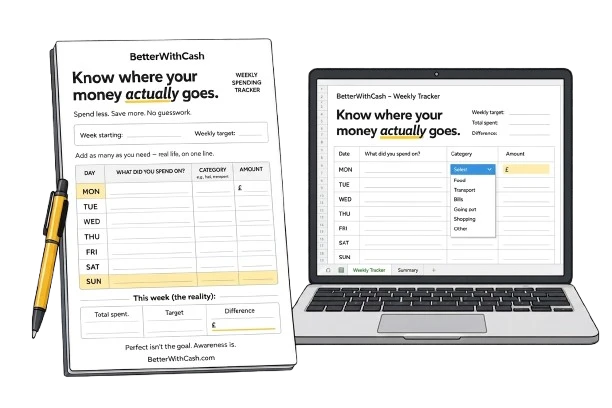
Build your first budget in 10 minutes
You’ve just learned the framework. Now use the planner to put it into practice.
- Takes under 5 minutes to setup
- Works with any income
- Helps you stay consistent