COMPLETE BEGINNER GUIDE
How to Stop Overspending (Without Feeling Miserable)
Stop wondering where your money went. Learn a simple system that helps you spend less without giving up everything you enjoy.
Start here
If you’re not sure where to begin:
- Track your spending for one week
- Find one category where you overspend most
- Reduce that category by just 10%
- Put the money you save into savings immediately
👉 Small wins are far more powerful than trying to change everything overnight.
Who this guide is for
This guide is for anyone who regularly reaches payday wondering where their money went.
Do you buy little things throughout the week that add up? Maybe online shopping has become a habit. Perhaps your budget looks good on paper but never seems to work in real life.
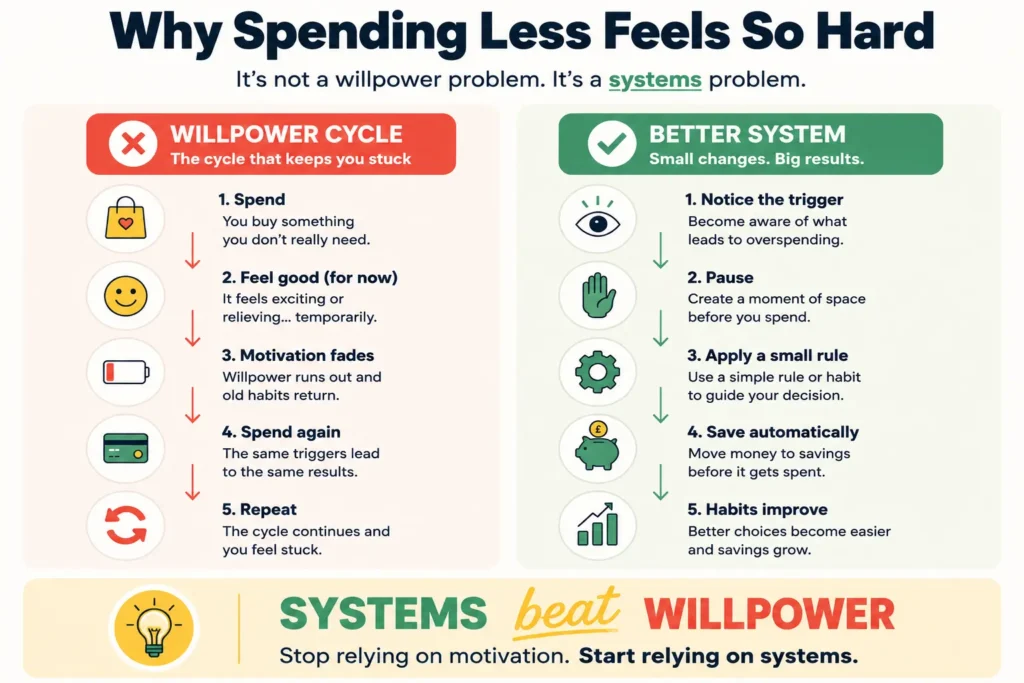
The good news is that overspending usually isn’t about a lack of willpower. It’s about habits, triggers and having a system that makes good decisions easier.
Table of Contents

Quick Summary
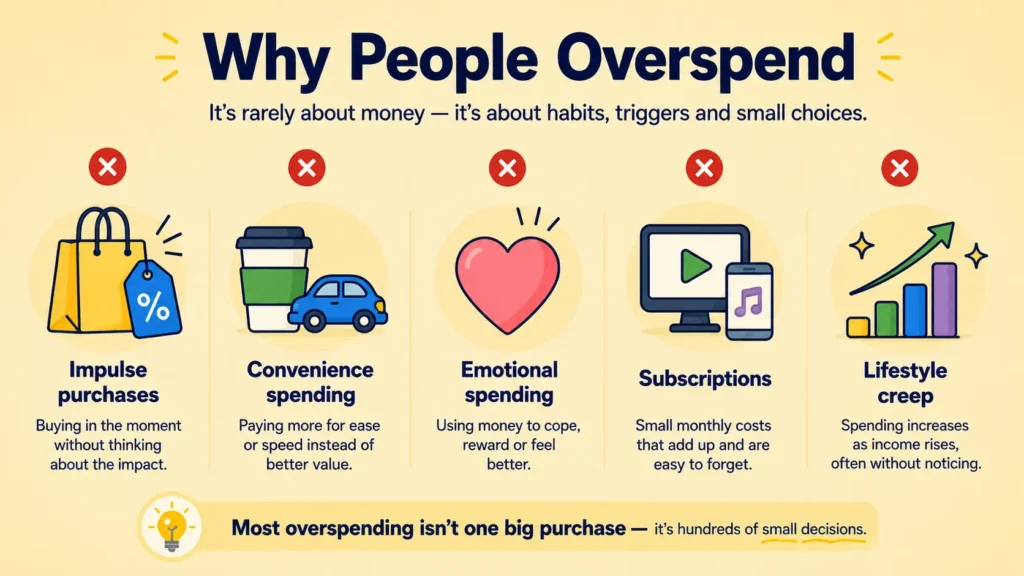
- Most overspending comes from habits rather than big purchases.
- Focus on your biggest problem category first.
- Cutting spending by 10% is usually enough to make a noticeable difference.
- Small changes repeated every week beat dramatic lifestyle changes.
What overspending really means
Overspending simply means you’re regularly spending more than you planned. That doesn’t necessarily mean you’re in debt. It means your money is going somewhere you didn’t intend.
Sometimes that’s because your budget isn’t realistic. Sometimes it’s because you spend emotionally. Sometimes you simply don’t realise how quickly lots of small purchases add up.
The goal isn’t to stop spending. The goal is to spend intentionally.
Why most people struggle
Most people don’t overspend because they’re bad with money.
They overspend because:
- they don’t know where their money goes
- they make lots of small impulse purchases
- they shop when bored or stressed
- they don’t have realistic spending limits
- they rely on willpower instead of systems
👉 The solution isn’t more discipline. It’s making good decisions easier.
What type of spender are you?
Overspending does not look the same for everyone. Answer six quick questions to identify the habits most likely to influence your spending—and the changes that could give you more financial freedom.
Your spending personality
The Impulse Spender
You are most vulnerable in the short gap between seeing something and buying it. Discounts, urgency and excitement can make a purchase feel more important than it really is.
Your likely blind spot
You may judge purchases by how they feel now rather than what they delay later.
What it can mean for your freedom
Repeated impulse purchases can quietly consume the money that could provide savings, flexibility and freedom from financial pressure.
Your spending personality
The Emotional Spender
Your spending is often connected to how you feel. Buying something can offer comfort, reward or distraction—but the effect is normally temporary.
Your likely blind spot
The purchase may be responding to an emotional problem rather than a practical need.
What it can mean for your freedom
Emotional spending can become a repeating cycle that reduces savings while leaving the original trigger unchanged.
Your spending personality
The Convenience Spender
You often pay to remove friction. Takeaways, taxis, express delivery and last-minute purchases make life easier—but the premium adds up.
Your likely blind spot
You may see each payment as necessary without noticing how frequently poor preparation creates it.
What it can mean for your freedom
Convenience spending can absorb money that could give you more savings, less working pressure and greater resilience when costs arise.
Your spending personality
The Lifestyle Spender
You value experiences, quality and enjoying the present. The risk is not one particular purchase—it is that your expected lifestyle expands faster than your financial security.
Your likely blind spot
Higher income can feel like permission to increase every category rather than strengthen your future.
What it can mean for your freedom
Lifestyle creep can keep financial freedom permanently one pay rise away, however much your income grows.
Your spending personality
The Avoidant Spender
Your main problem may not be individual purchases. It is the lack of regular feedback. When you avoid reviewing transactions, small costs can continue without challenge.
Your likely blind spot
You may monitor your account balance without understanding what is driving it.
What it can mean for your freedom
Avoidance reduces your sense of control and makes it harder to build savings or trust your own financial decisions.
Most people show traits from more than one type. Your result highlights the pattern most likely to affect your decisions.
1
Find your biggest spending leak
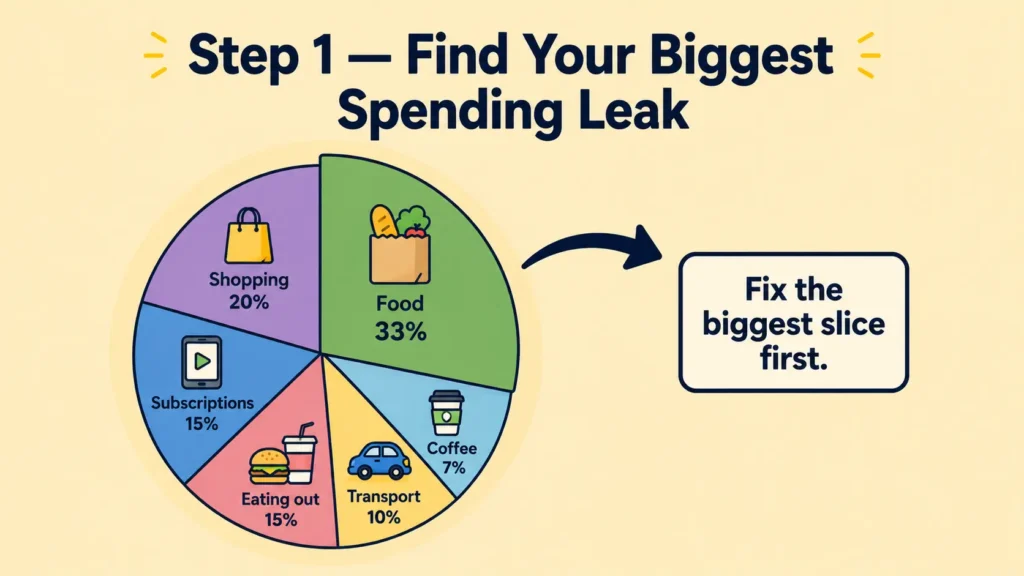
Before cutting anything, work out where the money is actually going.
Review your last month’s bank statement and highlight.
- food
- takeaways
- coffee
- Amazon
- entertainment
- subscriptions
- travel
Don’t worry about every penny, you’re simply looking for patterns.
You’ll usually discover one category that’s responsible for most of the overspending. That’s where to start.
Find your biggest spending leak
Enter a rough monthly estimate for the categories below. The calculator will show which one is costing you most—and how quickly the small amounts accumulate.
Estimates are fine. The aim is insight, not perfect accounting.
Your biggest opportunity
Takeaways
You currently spend approximately £80 a month here— around £960 over one year.
How the spending accumulates
Cumulative cost over the next 12 months
2
Identify your triggers
Every overspending habit has a trigger. Ask yourself:
- do I shop when I’m bored?
- do I order takeaway because I didn’t plan meals?
- do I browse Amazon for fun?
- do I spend more when stressed?
- do I buy things because they’re on sale?
Once you know the trigger, you can change the habit.
3
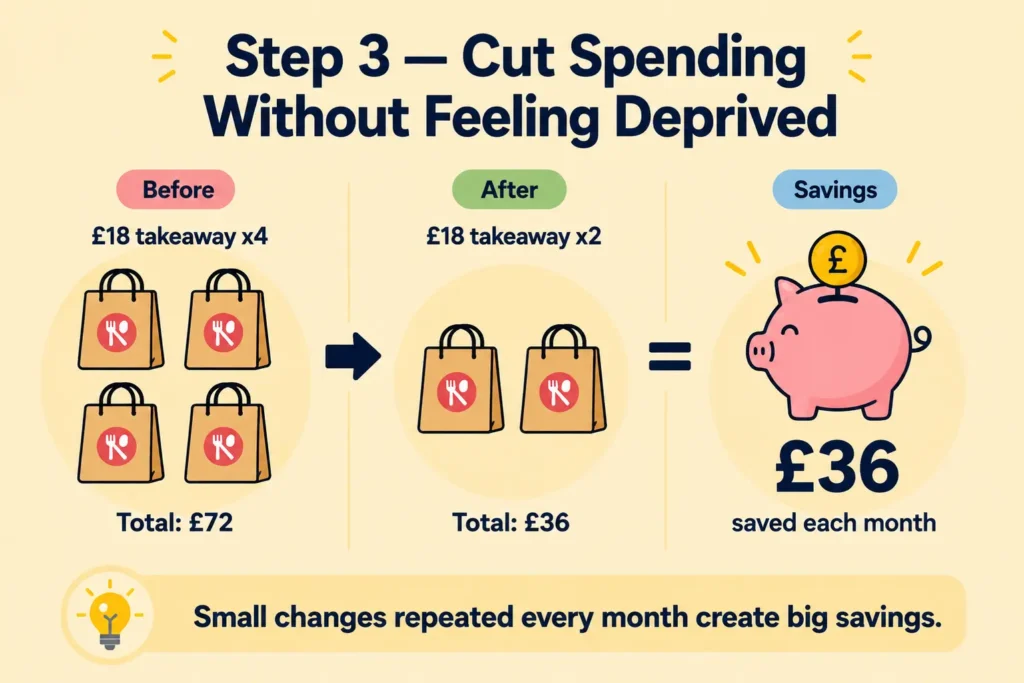
Spend a little less
Avoid trying to stop spending completely. Instead:
- cook at home one extra night each week.
- cancel one unused subscription.
- take lunch to work twice a week.
- wait 24 hours before buying non-essential items.
- reduce online shopping by one order each month.
Small reductions are much easier to maintain.
4
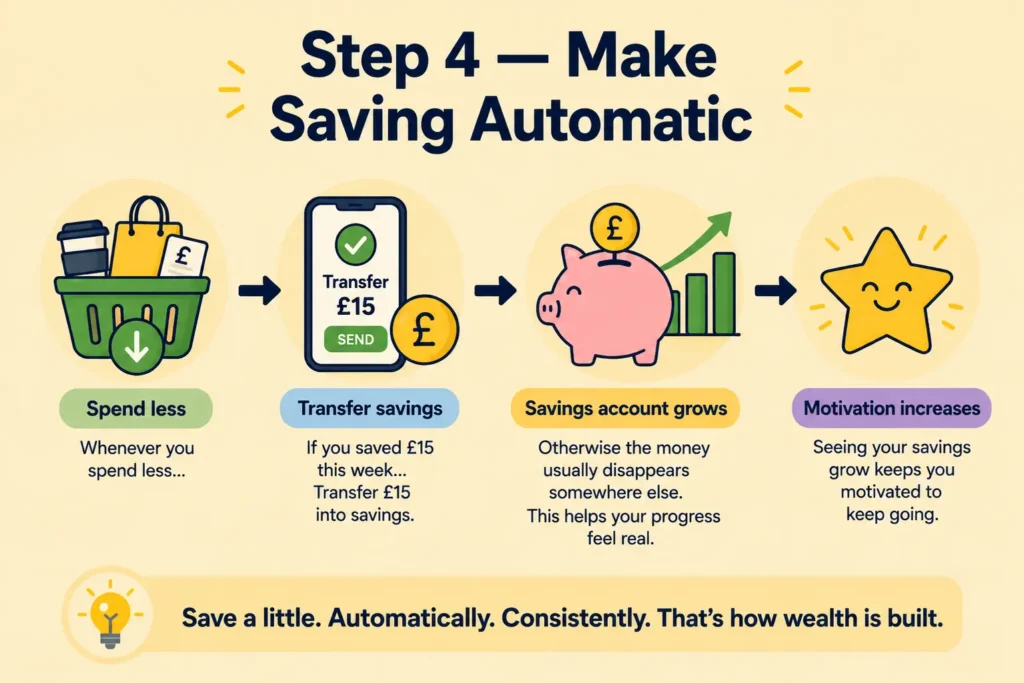
Make saving automatic
Whenever you spend less…move the money immediately.
If you saved £15 this week, move it immediately to savings.
- cook at home one extra night each week.
- cancel one unused subscription.
- take lunch to work twice a week.
- wait 24 hours before buying non-essential items.
- reduce online shopping by one order each month.
Otherwise the money usually disappears somewhere else. This helps your progress feel real.
Spend with purpose, not perfection
The goal isn’t to stop spending. The goal is to make every pound work a little harder.
What This Looks Like in Real Life
☕ I keep buying coffee every morning
Rather than stopping completely, buy coffee three days instead of five.
That’s often £25–40 per month saved.
🥡 I always order takeaway
Plan two easy freezer meals.
You don’t need to cook every night. You just need fewer expensive evenings.
🛍️ I buy too much on Amazon
Add items to your basket. Wait 24 hours.
You’ll be surprised how many purchases you no longer want.
📊 I never stay within budget
The problem may not be your spending. Your budget may simply be unrealistic.
Adjust it rather than giving up.
⚠️ Common mistakes
- Trying to change everything at once
- Setting unrealistic limits
- Feeling guilty after one bad week
- Not reviewing your spending
- Thinking one expensive purchase ruined the month
👉 Progress matters more than perfection.
FREE 7-DAY SPENDING RESET
Build Better Spending Habits in One Week
Complete one practical task each day to identify your triggers, reduce unnecessary spending and build habits that actually stick.
- Printable PDF
- Takes 10 minutes a day
- No sign-up required
1
Notice
2
Pause
3
Reset
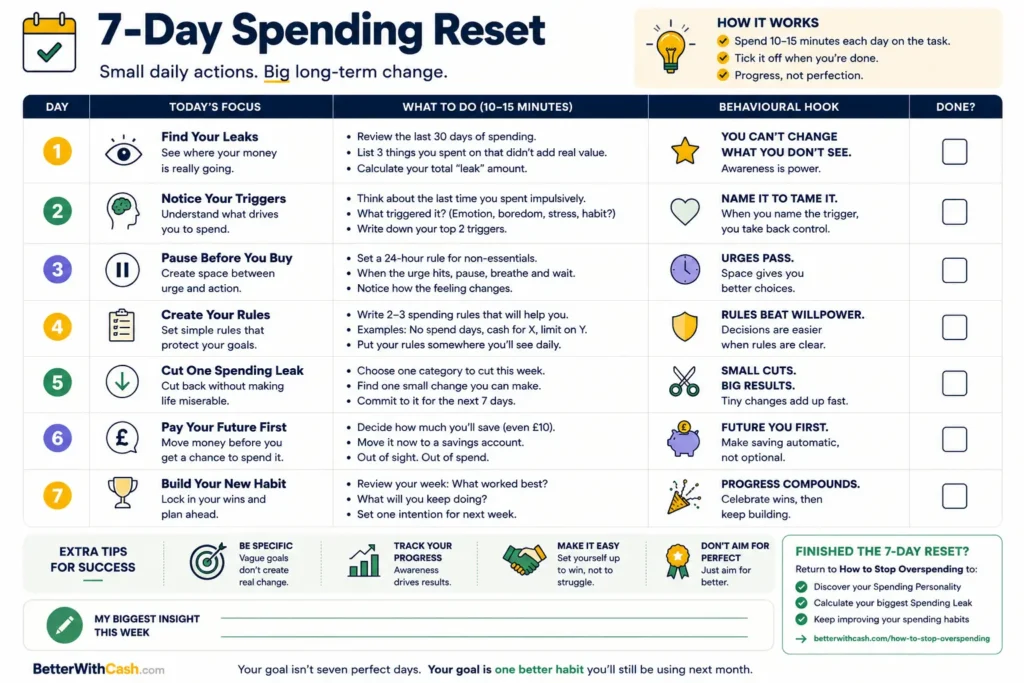
FREE 7-DAY SPENDING RESET
Build Better Spending Habits in One Week
Complete one practical task each day to identify your triggers, reduce unnecessary spending and build a system you can maintain.
1
Notice
2
Pause
3
Reset
- Printable PDF
- Takes 10 minutes a day
- No sign-up required
Free tools to help you take the next step
You do not need to build your whole budgeting system at once. Choose the tool that matches what you need help with next.
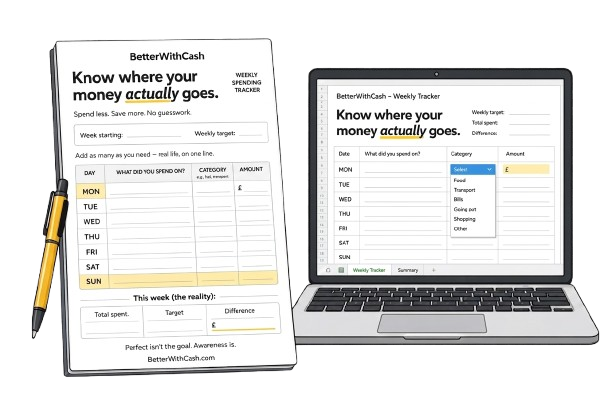
Track your spending for seven days and use what you find to identify the habits worth changing first.
Best for: spotting leaks and problem categories before trying to cut everything.
Create a realistic monthly plan that gives saving a place before discretionary spending takes over.
Best for: making saving part of your normal monthly money flow.
Identify the patterns and motivations behind the way you spend.
Best for: recognising the triggers that make overspending harder to control.
Get a quick snapshot of the budgeting habits that are working and the areas that need more attention.
Best for: deciding which part of your money system to improve next.
⏱ How long does it take to stop overspending?
Most people notice improvements within two to four weeks.
Building lasting habits usually takes around two to three months.
Don’t aim for perfection. Aim for steady improvement.
Common questions
Why do I always overspend?
Usually because your spending habits don’t match your budget, rather than because you earn too little.
Should I stop using my credit card?
Not necessarily. The important thing is paying it off in full every month and sticking to your spending plan.
What’s the easiest way to spend less?
Find your biggest overspending category and reduce it by around 10%.
Don’t try to cut everything.
Should I budget every week or month?
Review spending weekly. Review your full budget monthly.
That gives you quick feedback without becoming overwhelming.
Can I still enjoy life and spend less?
The goal isn’t to stop spending—it’s to spend more intentionally.
Most successful budgets don’t remove everything you enjoy. Instead, they reduce the purchases that matter least so you can afford more of the things that matter most.
What would you like to do next?
Choose the next step that’s most useful for you right now.

Ready to take control of your spending?
You’ve identified why you overspend. Now build a budget that actually works.
- Takes under 10 minutes
- Works with any income
- Beginner friendly